
Chief Operating Officer
Shehzad (Ameer) Akbar
Ameer owns how HIVENOX engagements actually run commercial governance, delivery cadence and the operational controls that enterprise and regulated clients expect before an AI Worker touches live data.
HIVENOX is an AI business ecosystem AI Workers, intelligent agents, business modules and governed automation running as one environment. We are not another tool your team has to learn. We take a function that is under-resourced and put a Worker in it that produces output every day, under controls your risk team can sign off.
HIVENOX is the product. AIST AI Solution Technologies is the enterprise consultancy that designs, implements and governs it. That pairing is deliberate: most AI programmes stall not because the model is wrong but because nobody owns the data readiness, the integration work and the governance that has to sit around it.
One group covers both ends. The people who scope an engagement are the people accountable for the Worker still running six months later, across our teams in Australia, the Gulf, Pakistan and the United States.
Teams are carrying more process than headcount, stitched across a dozen subscriptions that each solve a slice of the job and hand the rest back to a person. Adding another tool adds another surface to maintain. It does not add anyone to do the work.
HIVENOX was built to close that gap to take ownership of a defined function, run it continuously, and report on the result rather than on usage. That is the difference between buying a licence and hiring capacity.

An AI Worker earns its place the day a team stops checking its output line by line and that only happens when the data underneath it is governed, auditable and built to survive review.
The platform is founder-led, shaped by more than a decade inside banking, government and large enterprise environments places where a system that cannot be explained to an auditor does not get deployed at all. That standard is the reason governance sits at the centre of the ecosystem rather than at its edge.
The ecosystem was designed against regulated, high-consequence environments banking operations, government service delivery and large construction programmes. Those settings set the bar: role-based access, full audit trails, data residency, and a human approval step wherever a decision carries commercial or legal weight.
Designing for that from the start is why the same architecture serves a fifteen-person agency and a giga-scale delivery authority. The controls scale down comfortably. Retrofitting them upward rarely works.
Four commitments that shape every engagement, from a single Worker to a full ecosystem rollout.
You hire output. Workers are scoped to a function and measured on what they produce, not on seats filled.
Access control, audit trails, data residency and human approval gates are part of the build, never a later retrofit.
Every Worker ships with the integrations, runbooks and escalation paths that keep it running after go-live.
Where the result is measurable, we will carry part of the commercial risk of delivering it.
Five stages from the first conversation to a Worker reporting against a number.
We start with the department that is hurting, not with a technology shortlist the work, the volume and the handoffs.
We connect the systems of record and resolve the access, quality and permission model a Worker needs to act safely.
The Worker goes in against a real queue with defined guardrails, approval steps and a named business owner.
Once it holds, we connect neighbouring functions so the output of one Worker becomes the input of the next.
We run it, tune it and report against the outcome the engagement was signed on.
Headquartered in Australia, delivering across the markets where our clients run their operations.
Engineering depth and senior commercial experience in one group. The people who scope an engagement are the people accountable for delivering it which keeps the promises made in a sales conversation tethered to what can actually be built.
Ameer owns how HIVENOX engagements actually run commercial governance, delivery cadence and the operational controls that enterprise and regulated clients expect before an AI Worker touches live data.

Ethan sets the platform architecture the ecosystem is built on, from the data fabric underneath the Workers through to the cloud, identity and zero-trust models every deployment inherits.

Sophia leads how the Workers think the agent design, retrieval architecture and evaluation standards that decide whether a Worker is trusted with a task or kept behind an approval gate.

Emily owns the data layer the ecosystem depends on: the unified model, lineage and classification work that has to be right before any Worker is allowed to act on a customer record.

Michael structures the commercial side of outcome-based delivery how packages are priced, how results are measured, and how HIVENOX can put its own margin behind a number it has quoted.

Ryan runs the build and release path from scoped Worker to production queue, and holds the engineering standards that keep a deployment supportable long after the launch call.
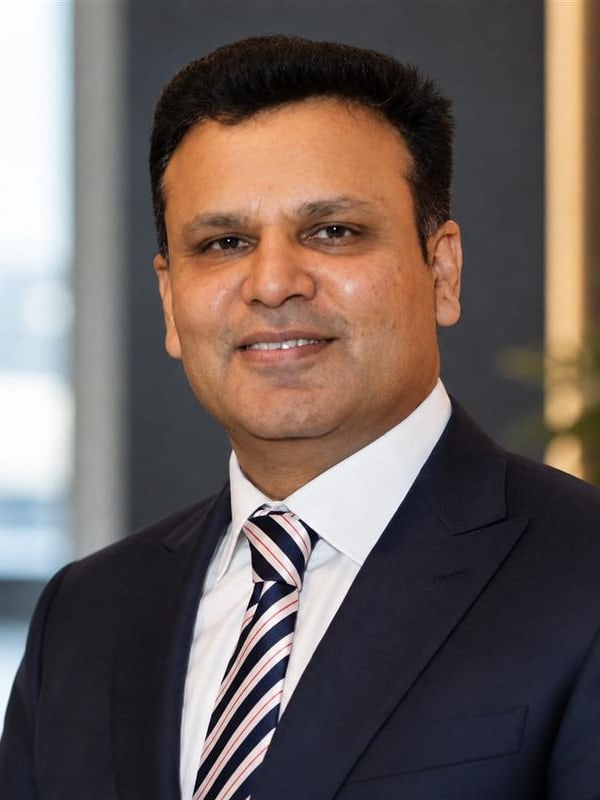
Ahmed works with clients before anything is scoped, translating a business problem into the function a Worker should own and the outcome the engagement should be judged on.

Sidra brings the built-environment expertise behind Construction OS, shaping how the platform models assets, compliance obligations and the realities of a live site.

Ahmed leads implementation across client environments, connecting HIVENOX to the systems already in place so a Worker reads and writes where the business actually keeps its records.

Osama builds the surfaces people use the dashboards, consoles and client-facing interfaces where the work an AI Worker does becomes something a team can see and act on.

Jasim builds and wires the agent tooling behind the Workers, turning model capability into the concrete actions, integrations and fallbacks a production queue relies on.
We will show you the Worker that owns it, what it would take to put it into production, and what the outcome would have to be worth for us to bill on it.